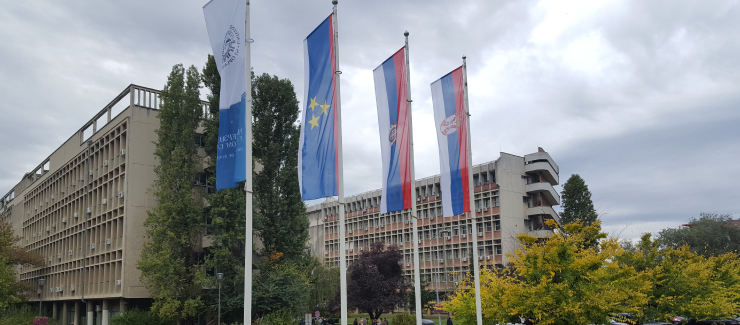











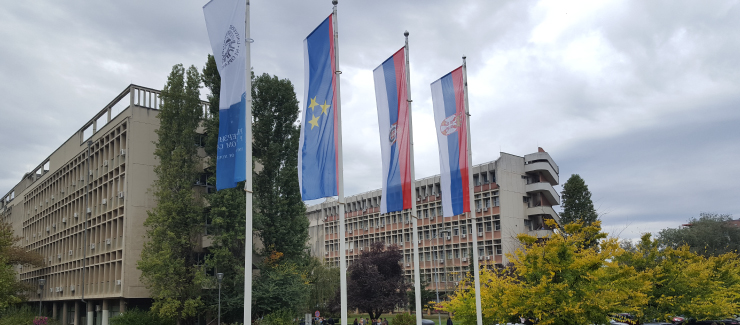
 Manuela Correia and Simone Morais, lecturers of the Department of Chemical Engineering of ISEP, applied, for the second time, to a mobility Erasmus + ICM in the Department of Applied Technology and Chemical Engineering, of the Faculty of Technology of the University of Novi Sad, Serbia.
This mobility occurred between October 7th and 11th and it is a continuation of a training project, in which they already participated last year. The purpose of this training was to get knowledge on the handling of compound extraction equipment, using subcritical water. This is a technique that requires equipment not available at ISEP, and that is relevant for the Department of Chemical Engineering, both in research and pedagogical terms. This extraction technique has great interest and relevance for the green technologies field and innovation, especially to fields related to Chemical Engineering and bioresources.
Extraction techniques are separation techniques, commonly based on the use of organic solvents. These solvents are, often, toxic and agressive for the environment and require a special treatment to be discarded. In Novi Sad, Manuela Correia e Simone Morais deepened a technique that uses water, under high pressure and temperature conditions, which set it in a subcritical state, becoming a good solvent to a wide range of compounds. Being water, it turns out to be perfect to the environment, since it reduces drastically the enviornmental impact. The importance of this technique has been growing, over the years, in the byproduct’s valorization field.
The relevance of the partnership with the Novi Sad team resides in their great knowledge of byproducts valorization, waste reduction and decreasing of environmental impact.
In addition to learning this tecnhique, the professors intended to establishing research collaborations.
The research group GRAQ (Group of Chemical Reactions and Analysis) is developing several studies around different extraction techniques with bioactive compounds. For this reason, GRAQ turns out to have complementary skills to those of Novi Sad’s host team, which may lead to the creation of something innovative to the market.
The collaboration proposals intended to check the availability of the University of Novi Sad to receive students from ISEP, who want to develop their Master’s dissertation in the next semester.
During the mobility, the lecturers visited many laboratories, had the opportunity to get to know some new projects and worked on their current projects and scientific papers. They emphasized the importance of this kind of mobilities for their pedagogical and scientific development and of the department in which they operate.
Thanks to these mobilities, Manuela Correia and Simone Morais have been able to learn and share knowledge with their peers, which make these collaborations very important for the researchers and education institutes involved.