




























.jpg)
Instituto Superior de Engenharia do Porto (ISEP) is leading the Digi4RailBridges project, approved by FCT – the Portuguese Foundation for Science and Technology and funded by COMPETE 2030, to develop advanced digital solutions for assessing the structural condition of railway bridges.
The project brings together teams from iBuilt – Center of Innovation in Digital Construction – and GECAD – the Research Group on Intelligent Engineering and Computing for Advanced Innovation and Development–, including the participation of FEUP – the Faculty of Engineering of University of Porto, through the CONSTRUCT and SYSTEC research units.
Digi4RailBridges proposes the development of an innovative digital platform based on the integration of data from structural health monitoring systems and information collected by computer vision systems mounted on drones. Data analysis will be carried out automatically using artificial intelligence techniques, enabling a paradigm shift in railway infrastructure management through the adoption of predictive maintenance strategies. The methodology will be validated on a bridge on the Northern Line, ensuring its applicability in a real-world context.
The consortium brings together complementary expertise in structural monitoring, artificial intelligence, computer vision and numerical modelling, ensuring a multidisciplinary approach focused on the digitalisation and modernisation of the railway sector.
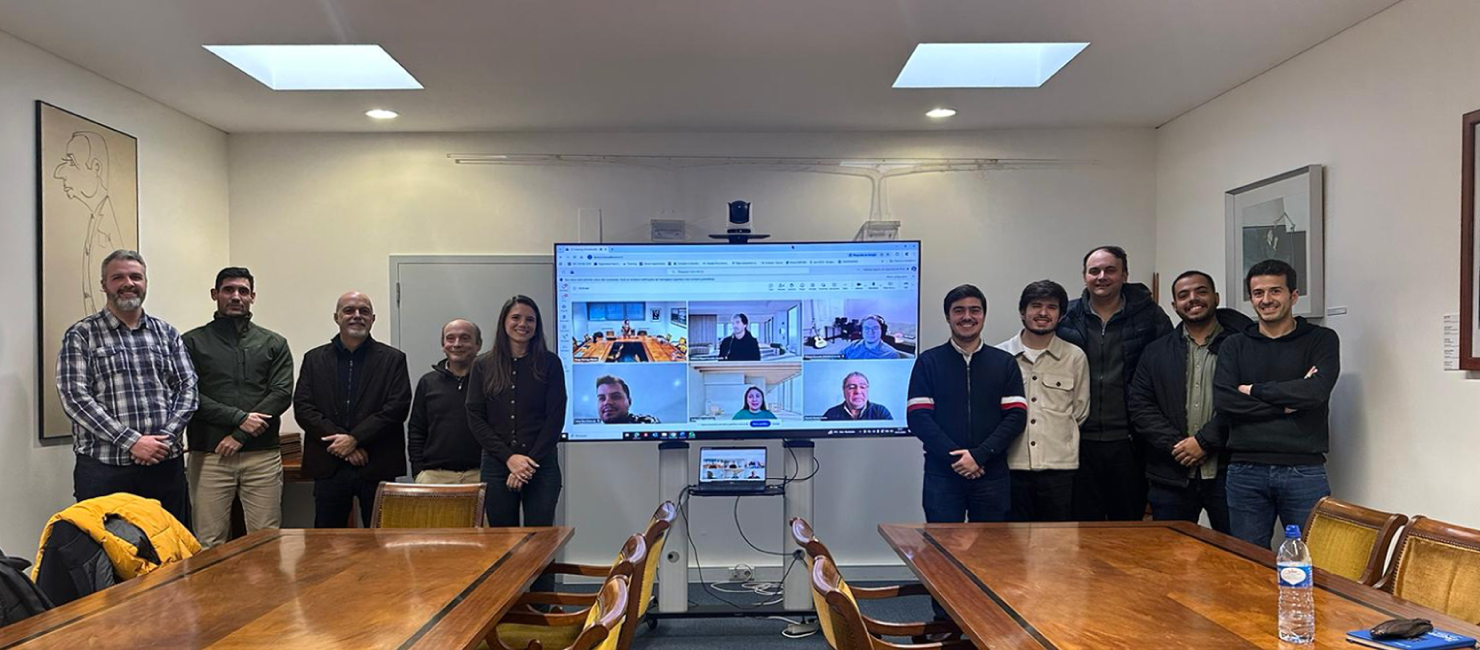
On 16 January, the consortium held the project’s first working meeting at FEUP, marking the start of a phase of increased technical engagement. During this session, the guiding principles for the implementation of IoT monitoring systems, remote inspection processes and the digital platform architecture were defined. Over the next six months, and in close coordination with Infraestruturas de Portugal, experimental monitoring and remote inspection campaigns are planned for the Cascalheira Bridge, located on the Northern Line. These activities will include the reinforcement of the existing monitoring system, aerial surveys using drones equipped with LiDAR technology, and image collection for the automatic detection of structural anomalies.